Family
Managing Your Children’s Money: JISAs, First Bank Accounts and Raising Money-Smart Kids
By Claire Dunn · Money & Deals Editor
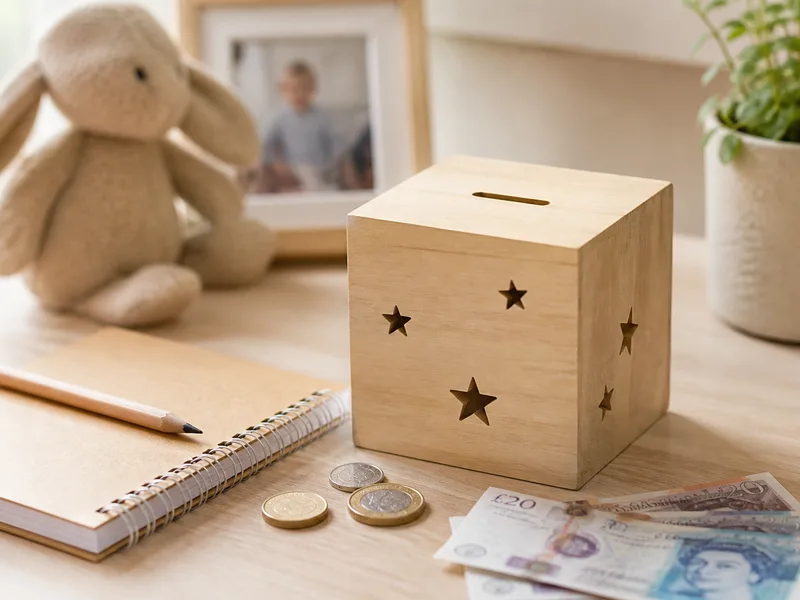
Children's money runs on two separate tracks — the long game (money that compounds quietly until 18) and the learning game (money they touch, spend and make mistakes with). Families who separate the tracks do both better, so this guide takes them in turn.
Should I open a Junior ISA for my child?
For long-term savings, usually yes: a Junior ISA shelters up to £9,000 per tax year, grows tax-free, belongs irrevocably to the child, and locks until their 18th birthday. Over an 18-year horizon, a junior stocks-and-shares ISA has historically outgrown junior cash ISAs comfortably — and the lock is a feature, not a bug.
The decisions inside that "yes":
- Cash vs stocks-and-shares — cash JISAs feel safe but often lose to inflation across 18 years; equity JISAs ride out short-term dips over that timescale. Many families split between both.
- Who can pay in — anyone (grandparents love a JISA at birthdays); only a parent or guardian can open it.
- The lock cuts both ways — money is the child's at 18, spendable on anything. If handing an 18-year-old a five-figure sum unnerves you, some families keep larger sums in their own ISA earmarked instead — less tax-efficient, more control.
- Child Trust Fund holders (born Sept 2002–Jan 2011): check for forgotten CTFs via gov.uk and consider transferring into a better-rate JISA — millions sit unclaimed in high-fee legacy accounts.
Compare current JISA rates and providers before defaulting to your own bank — MoneyGuide's savings guides track the market's moving parts in plain English.
When can a child open their own bank account?
Most UK high-street banks offer children’s current accounts from age 11 (some from 7 with parental oversight), free, with a debit card and app — the natural upgrade at secondary school when bus fares and lunch money go digital. Under-11s are better served by pocket-money cards with parental controls or a simple savings account you manage.
What to compare when opening one: parental visibility (most children's accounts let you see but not control after 11 — check which), zero-fee cash withdrawals, spending notifications, and whether interest is paid (a few children's accounts pay eye-catching rates on small balances — genuinely worth harvesting). The application usually needs the child's passport or birth certificate and a parent's ID; branch appointments still exist for exactly this rite of passage, and there's something to be said for making a mild ceremony of it.
How do I teach young children about money?
Under-8s learn from physical cash: coins in a clear jar, paying at the till themselves, and the visible arithmetic of saving up. From 6–8, regular pocket money — spent, saved and occasionally regretted — teaches more than any explanation. The single most powerful lesson at every age is the unrescued small mistake.
We've covered the pocket-money mechanics — amounts by age, chores-or-not, the spend/save/give jars — in our full pocket money guide. The toddler-specific groundwork that precedes it: let them hand over the coin and receive the change (money as exchange, not magic), count coppers into the jar together (money as arithmetic), and narrate small choices aloud — "we could get this or save for that" — because overheard reasoning is how money attitudes actually transmit.
How do I handle digital money and teenagers?
Teens live in a cashless economy, so teach the cashless skills directly: a current account with app notifications, a monthly (not weekly) allowance to force budgeting across time, honest conversations about in-app purchases and buy-now-pay-later before the world has them, and matched-saving deals that make delayed gratification pay visibly.
The specific conversations worth having by 16: how contactless makes spending feel free (have them read a month's transaction list aloud — the notification trail is the antidote), why BNPL is a loan wearing trainers, what a credit score is and how it follows you, and the basics of scams targeting teens (fake trainers, "money mule" DMs — a genuinely rising problem). For the mechanics behind any of it — interest, credit, tax when they start earning — MoneyGuide's plain-English explainers are written for exactly these kitchen-table conversations.
What questions come up most?
What’s the difference between a Junior ISA and a children’s savings account?
A Junior ISA is tax-free, capped at £9,000 a year, and locked until the child turns 18, when it becomes theirs outright. A children’s savings account has no lock — parents or the child can withdraw — but interest can be taxable against parental income above £100 a year where parents provided the money.
Can grandparents pay into a Junior ISA?
Yes — anyone can contribute to a child’s JISA once a parent or guardian has opened it, up to the shared £9,000 annual limit. Grandparent contributions can also be inheritance-tax-efficient, falling within gift allowances — a JISA standing order is one of the most effective birthday presents there is.
What happens to a Child Trust Fund?
Children born between 1 September 2002 and 2 January 2011 were given Child Trust Funds, many now forgotten in high-fee legacy accounts — gov.uk has a free tracing service. A CTF can be transferred into a Junior ISA, which usually offers better rates and lower fees, and matured CTFs (18+) can be claimed directly.
At what age should a child get a debit card?
Pocket-money cards with full parental controls work from around 6–8; a mainstream children’s bank account with a real debit card typically arrives at 11 with secondary school. The right moment is less about age than readiness: regular money to manage, and a parent still close enough to turn mistakes into lessons.
Sources & further reading
- Junior Individual Savings Accounts — GOV.UK
- Child Trust Fund — GOV.UK
Keep reading
Pocket Money in the UK: How Much, and When to Start
What UK children actually receive in pocket money by age, based on real transaction data, plus the chores-versus-unconditional debate and when most families start.

How to Make a Will as a Parent: Guardianship, Probate & Protecting Your Children
A UK parent’s guide to making a will — naming guardians, what a will should include, costs, mirror wills, probate and inheritance tax planning, in plain English.

How Much Does a Baby Really Cost in the UK?
A realistic first-year baby budget for UK parents — the big-ticket items, the recurring costs, what’s genuinely optional and the smartest places to save.