Baby
Colds, Fevers and Childhood Bugs: What’s Normal and When to Worry
By Emma Whitfield · Pregnancy & Baby Writer
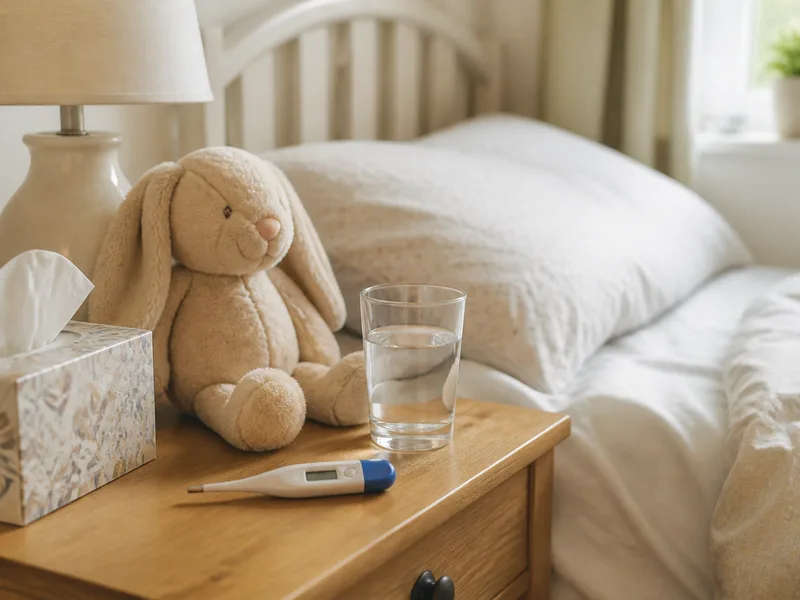
The first winter of nursery is a rite of passage: a new virus seemingly every fortnight, a permanently running nose, and a parent wondering whether this can possibly be normal. It is — and knowing the genuine red flags is what lets you ride out everything else calmly.
Why is my child always ill — is their immunity low?
Almost certainly not. A young child's immune system is untrained, not weak — 8–10 viral illnesses a year is normal, and starting nursery or school compresses years of virus exposure into months. Each infection builds memory; the "always ill" phase genuinely passes, usually within a year or two of starting childcare.
What supports the training rather than shortcutting it: routine vaccinations on schedule (the single biggest immunity intervention there is), vitamin D drops for under-5s, ordinary varied food, sleep, outdoor time and handwashing. What doesn't: multivitamin gummies marketed as "immune support", supplements beyond vitamin D, or avoiding all germs — although basic hygiene around newborns under 8 weeks is worth being firmer about, since their untrained systems have the least in reserve.
What counts as a fever — and what should I do?
38°C or above is a fever. Under 3 months: 38°C+ needs same-day medical advice, always. 3–6 months: 39°C+ does. Beyond that, treat the child, not the thermometer — a hot but alert, drinking, consolable child is usually fine at home; a floppy, unresponsive or persistently distressed one needs help regardless of the number.
Fever home care that the NHS actually endorses: fluids often, normal amounts of clothing (no bundling, no cold sponging), and paracetamol or ibuprofen for a child who is distressed by the fever — not simply to force the number down, since fever is the immune system working. Check dosing against the bottle by weight and age, never double-dose both at once without advice, and remember aspirin is never for under-16s. A fever lasting more than five days, or one accompanied by refusing all fluids and far fewer wet nappies, moves it into contact-the-GP territory. For the full age-by-age A&E vs 111 table, see when to take a baby with a fever to A&E. HealthAnswers' childhood illness guides cover the individual bugs — chickenpox, hand-foot-and-mouth, scarlet fever, bronchiolitis — in symptom-by-symptom detail.
When should I call NHS 111, the GP — or 999?
NHS 111 (phone or 111.nhs.uk) is the 24/7 route when you need medical advice today and the GP is shut — they triage and can book urgent slots. The GP handles anything persistent or worsening. Call 999 or go to A&E for: struggling to breathe, blue/grey/mottled colour, unresponsiveness, a first seizure, signs of severe dehydration, or a non-fading rash.
The escalation ladder, honestly applied:
- Home + pharmacist — snotty colds, mild temperatures in an otherwise-fine child, teething, mild rashes in a well child. UK pharmacists are underused and excellent for "is this anything?" questions.
- NHS 111 — out-of-hours worries, fevers in the under-3-month category, "not right but I can't name it", croup barking at midnight. They would rather you called than didn't.
- Same-day GP — fevers beyond five days, ear pain with fever, possible scarlet fever (sandpaper rash + red tongue), wheezing without distress, any illness in a baby under 8 weeks.
- 999 / A&E — the breathing, colour, responsiveness and rash red flags above. Trust the pattern: parents who "just knew something was wrong" are right often enough that every NHS pathway says act on it.
What is the glass test for meningitis?
Press the side of a clear glass firmly against the rash: spots that stay visible through the glass (don’t fade under pressure) can signal meningococcal septicaemia — call 999. But don’t wait for a rash: fever with a stiff neck, dislike of bright light, unusual drowsiness, an odd high-pitched cry, or cold hands and feet with a bulging fontanelle warrants emergency advice on its own.
The rash is often the last sign to appear, and on darker skin it can be harder to see — check paler areas (palms, soles, inside eyelids, roof of the mouth). Meningitis is rare, vaccination has made it rarer, and almost every non-fading-rash scare turns out benign — but this is the one childhood emergency where minutes genuinely matter, which is why every parent should know the test and its limits.
What questions come up most?
How many colds a year is normal for a toddler?
Eight to ten a year is completely normal for babies and young children — and with each cold lasting up to two weeks, a nursery-age child can seem ill more often than well through winter. Frequency alone isn’t a red flag; failure to grow, thrive or recover normally between illnesses is what warrants a GP conversation.
Should I give paracetamol and ibuprofen together for a child’s fever?
Not routinely — use one at a time for a child distressed by fever, at the dose on the packet for their age and weight. If distress returns before the next dose is due, NHS guidance allows alternating them with careful timing, but ask 111 or a pharmacist first, and never exceed either maximum daily dose.
When is a child too ill for nursery or school?
Fever is the usual line: children should stay home while feverish, and nurseries commonly ask for 48 hours clear after vomiting or diarrhoea. Streaming colds without fever are generally fine to attend — if every snotty nose meant staying home, no child would attend winter term at all.
What does a meningitis rash look like?
Pinprick red, purple or brownish spots or bruise-like blotches that do not fade when a glass is pressed firmly against them — often appearing late in the illness and harder to spot on darker skin, so check palms, soles and inside the eyelids. Any non-fading rash with an unwell child is a 999 call.
Sources & further reading
- Fever in children — NHS
- NHS 111 — NHS
- Meningitis symptoms — NHS
Keep reading
When to Take a Baby with a Fever to A&E (UK)
NHS-aligned UK guide to baby fever: exact °C thresholds by age, when to call 999 or 111, safe home care, and red flags that mean skip the wait.
Baby Teething: Signs, Timeline and How to Soothe It
When babies start teething, the real signs (and myths), the order teeth appear, and safe ways to soothe sore gums — plus what teething doesn't cause.
Why Is My Baby Crying? Colic and How to Comfort Them
The common reasons newborns cry, what colic actually is, calming techniques that help, and the red-flag signs that mean you should get medical help.